Moroccan Hash vs Lebanese Hash: 2026 Canadian Comparison Guide

Moroccan and Lebanese hash are the two most ordered import categories at HashMOM, and they are also the two that customers ask the most questions about. They look different, they smell different, they smoke different, and they have completely different histories. This 2026 comparison guide breaks down exactly how Moroccan hash and Lebanese hash differ so you can pick the right one for your next order without trial-and-error.
For wider context on imported hash, read our background piece on why import hash is better and the deep dive on how imported hash is made.
What Is Moroccan Hash?
Moroccan hash is produced in the Rif Mountains in northern Morocco, primarily around Chefchaouen and Ketama. Farmers harvest the cannabis plants, dry them, then sift the dried material through fine silk screens to separate the resin glands from the plant matter. The collected kief is then heated and pressed into the iconic flat slabs or blocks you see in the import market.
The technique is called dry sieving. It produces a softer, blonder, more pliable hash than hand-rubbed methods. Moroccan blonde and Moroccan mousseaux are the two style names you will see most often. The Rif region has been refining this process for over a thousand years.

What Is Lebanese Hash?
Lebanese hash comes from the Bekaa Valley, a high-altitude plateau in eastern Lebanon. The harvest tradition there dates back centuries and the production method is also dry sieve, but the cannabis cultivars and the climate produce a very different end product. Lebanese hash is sold in two main styles: Red Lebanese and Blonde Lebanese (sometimes called Yellow Lebanese).
The colour difference is mostly down to how long the plant material was aged before sifting. Blonde Lebanese is sifted from earlier harvested plants and tends to be lighter and brighter in flavour. Red Lebanese is sifted from plants that were left to dry and oxidize longer, which produces a darker, spicier, more sedating hash.
Visual Differences
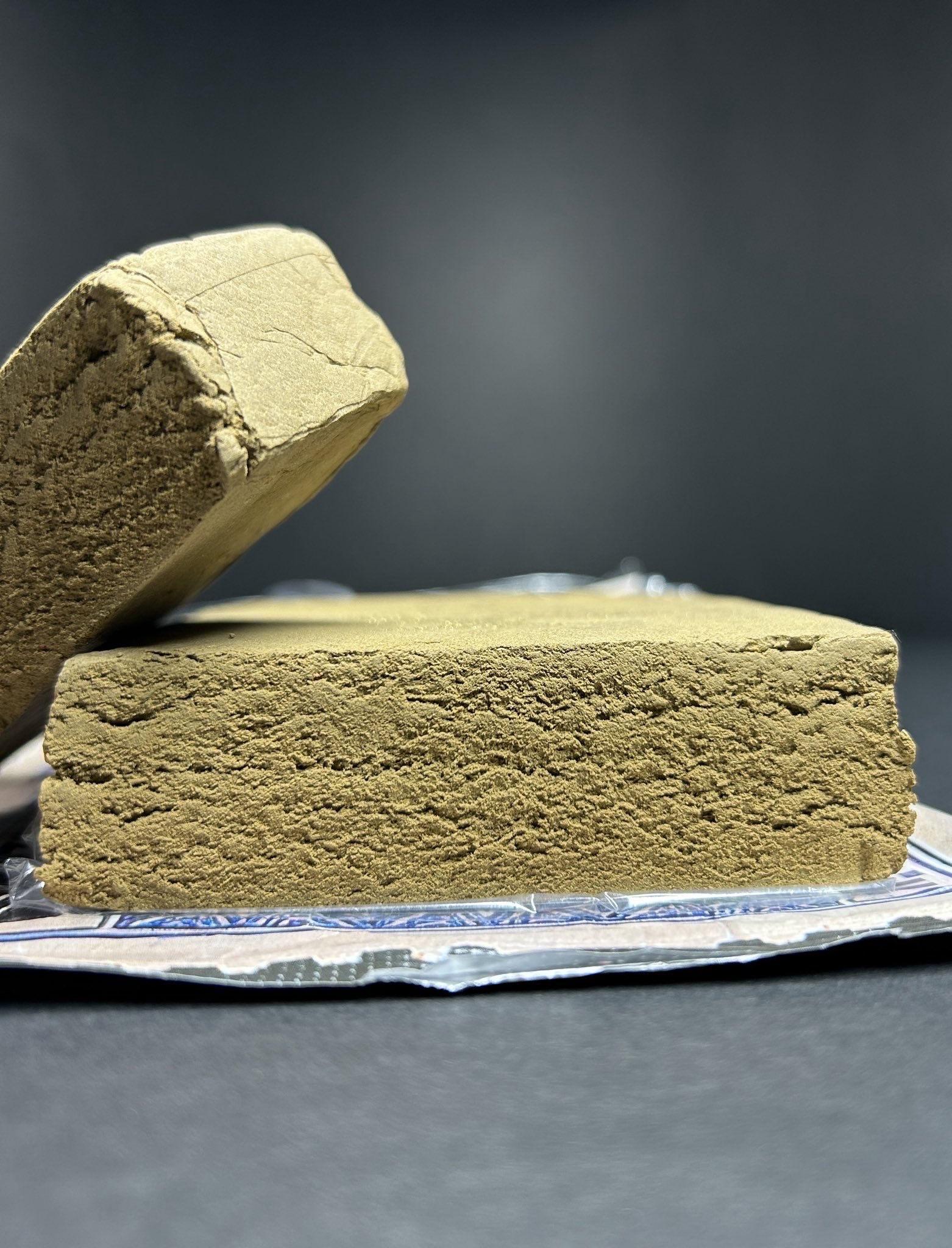
Side by side, the two look noticeably different:
- Moroccan: usually flat slabs, blonde to light brown, slightly soft and pliable at room temperature, often stamped with a maker mark.
- Lebanese Blonde: yellow to golden brown, firm pressed blocks, drier and harder than Moroccan, holds a sharp edge when broken.
- Red Lebanese: deep reddish brown, darker and harder still, breaks into smaller chunks rather than crumbling like Moroccan.
Aroma And Taste
The terpene profiles diverge a lot between regions. Moroccan hash usually carries a sweeter, slightly floral aroma with hints of spice. The smoke is smooth and the taste is described as creamy or buttery, especially in the mousseaux style.
Lebanese hash leans much spicier and more earthy. Blonde Lebanese has a pine and cedar note that hits early in the smoke. Red Lebanese pushes harder into baked spice territory with a long warm finish that lingers on the palate. If you have ever tried a quality aged Lebanese, you know the smell is unmistakable.
Texture And Workability
Moroccan hash is the easier of the two to work with. It warms quickly under finger pressure and crumbles cleanly into a joint or pipe. You can roll a Moroccan-only joint without much effort.
Lebanese hash is firmer and benefits from a gentle warm before crumbling. A lighter held under the chunk for a few seconds makes it break apart cleanly. Most Lebanese smokers either crumble small chunks into a joint with flower or pack a pinch into a glass pipe directly.
For a wider primer on how to actually smoke hash, see our walkthrough on how to smoke hash: 7 methods every Canadian should know.
The High
This is the part most customers care about. Generalising a little:
- Moroccan hash: more balanced, body-and-head, often described as a relaxed social high. Good for late afternoon, watching a movie, or smoking with friends.
- Blonde Lebanese: clearer head high, more uplifting, less sedating than Red. Works well for daytime or a creative session.
- Red Lebanese: heavier body load, deeper relaxation, leans toward indica-style night use. A classic before-bed smoke.
Average THC across imported hash usually lands in the 20 to 45 percent range. For a closer look at potency by region, read what is the average THC percent of hash.
Price Comparison In Canada (2026)
Pricing fluctuates with harvest cycles, but a rough 2026 snapshot:
- Moroccan hash: tends to land at the entry to mid range. High supply through the year keeps prices stable. Great value for the daily smoker.
- Lebanese Blonde: mid range, slightly above Moroccan due to lower import volume.
- Red Lebanese: premium tier. The longer aging process and limited harvest window push price per gram up, especially for stamped craft batches.
Top Moroccan Picks At HashMOM
The full Moroccan hash collection is worth a browse. Standouts:
- Moroccan Blonde Hash — the classic dry sieve blonde slab, soft, sweet, balanced.
- Moroccan Mousseaux Hash — the mousse-textured premium tier, fluffier and creamier.
- M-39 Royal Hash — a slightly stronger Moroccan-style pressed slab.
Top Lebanese Picks At HashMOM
The full Lebanese hash collection covers both blonde and red. Standouts:
- Red Lebanese 2.0 — the flagship red, classic Bekaa profile, deep aged flavour.
- Lebanese Blonde Stamp Hash — bright, clean, more daytime friendly than the red.
For a full rundown of Lebanese options, read our top 10 Lebanese hash list.
Which Should You Buy?
The short answer depends on what you want out of the session:
- You want a smooth, all-day, social smoke that does not knock you out: go Moroccan. Start with Moroccan Blonde Hash.
- You want a heavier night smoke with a long body high: go Red Lebanese.
- You want a clear-headed import for daytime creative work: go Lebanese Blonde Stamp.
- You smoke hash daily and want the best value per gram: Moroccan is usually the better dollar choice.
- You only smoke hash a few times a week and want a premium experience: spring for Red Lebanese.
Storage Notes
Both styles store well in airtight glass at room temperature, away from direct sunlight. Moroccan hash will stay soft and pliable longer if you keep it slightly cool. Lebanese hash holds its shape almost indefinitely and actually improves with a few weeks of rest after delivery. For long term storage, read best ways to store your hash.
Frequently Asked Questions
Is Moroccan stronger than Lebanese?
Not necessarily. Both regions produce hash in the 20 to 45 percent THC range. The high feels different, but the potency overlaps heavily. Red Lebanese tends to feel stronger because of the heavier body sedation, not the raw THC number.
Can I mix Moroccan and Lebanese in the same joint?
Yes, and a lot of hash smokers do exactly this to get a balanced head-and-body high. A pinch of Red Lebanese rolled with a small amount of Moroccan Blonde is a popular Canadian split.
Why is Red Lebanese more expensive than Moroccan?
Red Lebanese requires longer plant aging, smaller harvest windows, and limited geographic supply. Moroccan production runs at a much larger scale and ships more consistently year round.
Which is better for beginners?
Moroccan. Easier to work with, softer flavour profile, gentler high. Beginners can read our hash for beginners guide for a full intro.
Verdict
Both styles deserve a spot in your stash. Moroccan is the smoother, easier, daily-driver option. Lebanese (especially the Red) is the special-occasion smoke that hits harder and lingers longer. Most regular HashMOM customers end up keeping a small block of each on hand so they can pick based on the night. If you have never tried Lebanese, your next order should include a few grams of Red Lebanese 2.0 next to your usual Moroccan pick.
Ready to Upgrade Your Stash?
Stop gambling on low-grade knock-offs. HashMOM is Canada’s trusted source for authentic imports and premium craft concentrates. Shop our full selection today with fast, discreet shipping.