Moroccan vs Lebanese Hash
Moroccan vs Lebanese Hash: What’s the Difference?
Moroccan hash is dry-sifted in the Rif Mountains, blonde to light brown, soft and pliable, with a mild, sweet, spicy profile. Lebanese hash comes from the Bekaa Valley, is aged before pressing, and is drier, crumblier, and more peppery. Moroccan is typically softer and more aromatic. Lebanese is firmer, earthier, and comes in two grades: Red and Blonde.
What is Moroccan hash?
Moroccan hash is made in the Rif Mountains of northern Morocco, with the Ketama region as its most famous production zone. Farmers dry the harvested plants, then sieve them over fine mesh screens to separate the resin glands from the plant material. That resin powder, known as kief, is then pressed into slabs with heat and pressure.
Key characteristics:
- Color: blonde, tan, or light brown, sometimes with a greenish tint
- Texture: soft and pliable, easy to knead and crumble by hand
- Aroma: sweet, floral, and lightly spicy
- Grading: often sold by sieve count, with terms like “double zero” (00) indicating a finer, more refined sift
Because Moroccan producers dry-sift rather than water-extract, quality depends heavily on how many times the resin is sieved. Fewer passes produce a darker, greener, plant-heavy hash. More passes produce a cleaner, blonder, more potent product.
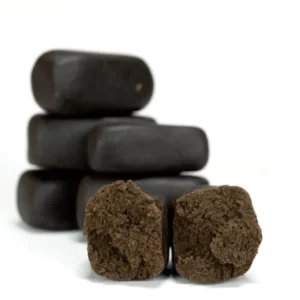
Hand-pressed imported hash blocks with a dark exterior and soft, pliable inside.
What is Lebanese hash?
Lebanese hash comes from the Bekaa Valley in eastern Lebanon, a high, dry plateau with a long, hot growing season. The defining difference is aging. Lebanese producers typically leave the harvested plants to dry and cure for weeks or months before sieving and pressing. That extended curing oxidizes the resin and changes both the color and the flavor.
Key characteristics:
- Color: either reddish-brown (Red Lebanese) or golden-yellow (Blonde Lebanese)
- Texture: drier and crumblier, holds its shape, breaks rather than bends
- Aroma: earthy, peppery, and spicy, with a distinctly aged character
- Format: traditionally pressed into firm slabs or bricks
Red Lebanese vs Blonde Lebanese: what’s the difference?
The two grades come from different harvest timings and curing lengths.
- Blonde Lebanese is made from earlier-harvested, less-cured material. It is lighter in color, softer in aroma, and generally described as smoother and more uplifting.
- Red Lebanese is made from later-harvested, longer-cured material. The extended oxidation gives it its reddish hue, a heavier spice profile, and a reputation for a more relaxing, body-centered effect.
Moroccan vs Lebanese hash: side-by-side
| Feature | Moroccan | Lebanese |
|---|---|---|
| Region | Rif Mountains (Ketama) | Bekaa Valley |
| Method | Dry-sift, pressed fresh | Dry-sift, aged before pressing |
| Color | Blonde to light brown | Red-brown or golden-blonde |
| Texture | Soft, pliable, kneadable | Drier, firmer, crumbly |
| Aroma | Sweet, floral, mildly spicy | Earthy, peppery, aged |
| Smoke | Smooth, aromatic | Fuller, spicier |
| Common grades | Sieve counts (e.g. 00) | Red and Blonde |
Which hash is stronger, Moroccan or Lebanese?
Neither region is automatically stronger. Potency depends on the sieve refinement and the quality of the starting material, not the country. A well-sifted Moroccan 00 can easily exceed an average Lebanese slab, and a top-grade Red Lebanese can outmatch a coarse Moroccan brick.
The more useful difference is character, not raw strength. Moroccan tends to be smoother and more aromatic. Lebanese tends to be spicier, heavier, and more traditional in flavor.
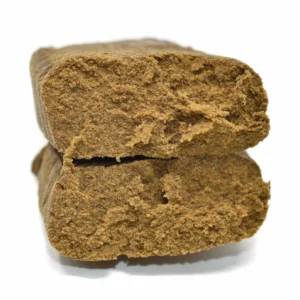
Moroccan hash with a classic golden-brown color and signature crumbly interior.
Which one should you choose?
Choose Moroccan if you want:
- A soft, easy-to-work texture
- A sweeter, more floral aroma
- A smoother, lighter smoke
- A classic entry point into imported hash
Choose Lebanese if you want:
- A firmer, drier slab that crumbles cleanly
- Earthy, peppery, aged flavor
- A heavier, more traditional experience
- The choice between an uplifting Blonde or a relaxing Red
How do you smoke each one?
Both are traditional imports and are handled the same way, but the texture changes the prep.
- Moroccan: warm it briefly between your fingers. It softens quickly and can be rolled into a thin snake or pressed into a joint or bowl.
- Lebanese: because it is drier, it usually needs a gentle warm-up before it crumbles evenly. Once warmed, it breaks apart cleanly and sprinkles well over flower.
Both work in a joint, a pipe, a bong bowl, or a hash-specific piece. Start with a small amount and work up, especially with a well-sifted product.
Frequently asked questions
Is Moroccan hash the same as “Ketama”? Not exactly. Ketama is a specific region in Morocco known for hash production. Ketama-labeled hash is Moroccan, but not all Moroccan hash comes from Ketama.
Why is Lebanese hash red? The red color comes from oxidation during the long curing period before pressing. It is a result of aging, not an additive.
Which is better for beginners? Moroccan is often the easier starting point because it is softer, more forgiving to handle, and generally milder in aroma and smoke.
Are both traditional imports? Yes. Both Moroccan and Lebanese hash are dry-sift, hand-pressed traditions that go back generations in their respective regions.
Ready to Upgrade Your Stash?
Stop gambling on low-grade knock-offs. HashMOM is Canada’s trusted source for authentic imports and premium craft concentrates. Shop our full selection today with fast, discreet shipping.