Most Legendary Hash Strains
Most Legendary Hash Strains: A Practical Field Guide
Ask ten hash lovers to name the most legendary strains in history and you’ll hear stories more than slogans—memories of cedar-scented suitcases, slow-burning ribbons in hand-rolled cigarettes, and late nights that felt suspended in warm light. “Legendary” isn’t only about potency. It’s about aroma, texture, melt, and ritual; about how a brick smells when you crack it; about the way it softens between your fingers and changes a room’s tempo. This guide walks through the hash strains and styles most often called iconic, why they matter, how they differ, and what to look for when you’re tasting today. Where it helps, you’ll find links to real examples that capture the profile faithfully, so you can experience the differences first-hand without chasing fairy tales.
The Afghan Family: Incense, Cocoa, and Slow Evenings
When people picture “classic hash,” they’re often imagining Afghan resin—dark exterior, chocolate-brown interior, and a supple, putty-like pull that warms between the fingers. The nose leans incense, cacao, molasses, and polished wood; the effect is steady, chest-warming calm that makes conversation slower and softer.
If you want a benchmark for this profile, start with Afghan Black Hash. It’s the style many enthusiasts use to calibrate melt and texture: a quiet, steady bubble under gentle heat and a ribbon that burns forever in a joint. On a slightly more aromatic branch of the Afghan family tree sits Mazar-e-Sharif—from the northern plains near the city of Mazar—often carrying a raisin-sandalwood lift that brightens the exhale without leaving the Afghan lane. For a silkier, late-night interpretation, Black Bombay Hash tends to be extremely refined—edges tidier, pull more satin than suede, and a finish that feels like a weighted blanket.
Why the Afghan family is legendary comes down to consistency. Dry-sift production, careful warm pressing, and a patient cure all converge to deliver a resin that’s forgiving to roll, rewarding at low heat, and timeless in flavor. If you only try one traditional style, make it Afghan. It sets the reference point for so much of the world’s vocabulary around hash.
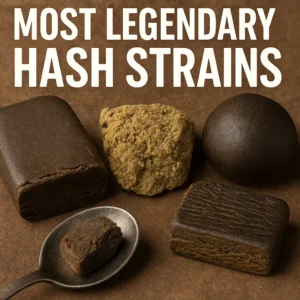
Icons of hash: Afghan depth, Lebanese brightness, Moroccan crumble, and Himalayan temple craft side by side.
Lebanese Red: Sun-Cured Spice and Cedar
Lebanese Red is another name that lives large in hash lore. The characteristic color comes from longer drying and curing of the plants before sifting and pressing, which oxidizes the trichomes and steers the nose toward cedar, baking spice, dried herbs, and faint berry. The texture is often a touch crumbly compared with Afghan, and the mood is more conversational—less heavy, a bit more daytime-friendly.
Red Lebanese cemented its fame through export reliability during certain eras when other regions were turbulent. It taught people that hash could be bright and aromatic rather than strictly deep and chocolaty. If you’re mapping your palate, place Lebanese Red on the opposite end of Afghan: the same fundamental craft, but dressed in cedar shavings and pantry spice instead of incense and cocoa.
Lebanese Blonde: Honeyed Herb and Clean Finish
The Blonde counterpart is prized for a honey-straw hue and a clean, herb-forward finish. It typically breaks easily, mixes beautifully with flower, and shines in social settings. Blonde and Red together show how curing and sifting choices can paint the same plant in two colors—another reason Lebanese presses hold legendary status in stories passed down through rolling papers and kitchen tables.
Moroccan Kief Press: Café Brightness and Easy Crumble
Morocco’s contribution to the pantheon is hard to overstate. For decades, Moroccan kief press defined the coffeeshop experience across Europe: dry-sifted, sandy resin pressed into tidy slabs that crumble like cake. Flavor rides herbal, hay-sweet, and sometimes minty rather than incense-heavy, and the effect trends uplifting and chatty. While the modern scene includes ice-water hash and rosin, the classic Moroccan brick remains a rite of passage—a reminder that hash can be light on its feet without losing character.
If you like the café vibe but want a piece that blends that neat presentation with Afghan depth, the crossover style of Hash Amsterdam is a useful waypoint: tidy press, reliable melt, and a touch cleaner on the finish than the deep Afghan bricks.
Kashmir: Hand-Rubbed Calm and Earthy Sweetness
Some of the oldest living hash traditions are hand-rubbed in the Himalayas, and Kashmir stands out for its silky, rounded personality. Instead of separating dry trichomes and pressing, cultivators rub fresh plants and form the resin by hand, then consolidate and cure it. The result is darker, sometimes oilier, and extraordinarily gentle on the throat. The palate runs earthy, with forest floor, warm spice, and quiet sweetness.
When people ask for a comforting hash that doesn’t knock them flat, Kashmir Hash is high on the list. It’s forgiving to roll, easy to share, and proof that “legendary” can mean soothing rather than simply strong. Kashmir also highlights how method changes feel: hand-rubbed charas is a different conversation than dry-sifted Afghan or Moroccan press.
Nepalese Temple Ball and Finger Hash: Glossy Depth and Ritual
The Temple Ball mythology runs through Nepal: dark, glossy spheres with a buttery interior and a resinous, fruit-flecked aroma. While not every round ball is true temple craft, the style remains iconic for its tactile ritual—warming a pea-sized piece, shaping it into a ribbon, and watching it slowly gloss and bubble.
A faithful charas-style reference is Nepal Finger Hash, which leans into that glide: gentle, rounded, and almost meditative. Nepalese and Kashmiri pieces often become a favorite second choice in a tasting flight—Afghan provides the deep anchor, while Himalayan hand-rub adds poise and grace.
Pakistani and Mazar Lines: Black Gold Across Borders
Hash history doesn’t care about modern borders. Regions across Afghanistan and Pakistan share cultivars, techniques, and trade routes that shaped the “black gold” reputation. You’ll see names like Peshawar, Chitral, Swat, and of course Mazar—short for Mazar-e-Sharif—attached to bricks that smoke nearly identically to Afghan classics but carry local pride. When a friend swears he had the best hash of his life in Karachi or Kabul, they’re often describing the same incense-cocoa profile with subtle terroir differences in the cure.
Again, if you want to understand that spectrum in your own time zone, pair Afghan Black Hash with Mazar-e-Sharif and Black Bombay Hash. The comparative tasting teaches more than any map.
Turkish and Greek Press: Resin with a Seaside Accent
Less discussed but fondly remembered are Turkish and Greek presses—often tidy, elastic, and mildly spiced. These pieces were common where trade routes spilled into the Mediterranean. The aroma skews herb and faint anise, the texture sits between Moroccan crumb and Afghan putty, and the burn is smooth in thin ribbons. They’re “legendary” because they traveled: many first hash memories in Europe trace to a Turkish or Greek slab cracked open on a beach holiday.
Egyptian and “Old Cairo” Stories: Sandalwood Memory
You’ll hear veterans talk about Egyptian hash with a sandalwood whisper and a hint of the Nile delta’s sun. Documentation is thin and the modern market is inconsistent, but the legend persists because of the distinctive cure some Cairo-bound pieces used to show: a leathery outside, a pliant center, and smoke that felt like a low lamp turned warm. As with all nostalgia categories, let your senses decide rather than the stamp.
Modern Bubble Hash and Rosin: The New Legends
It would be a miss to ignore how bubble hash and hash rosin have redrawn the map. Ice-water separation and careful freeze-drying can deliver full-melt granules that bubble like sugar on a skillet, with cultivar-specific fragrance—tropical, fuel, candy, or dough—that old-world presses rarely express. Purists might argue these aren’t “strains” in the classic sense, but there’s no question certain cultivars—Chemdog, OG-leaning lines, Skunk family, modern dessert terps—have become legendary in solventless because they wash well and hold flavor at low heat.
The smart move is to compare. Taste a bright bubble cut one evening, then anchor the next with Afghan or Kashmir. The dialogue between new and old explains both better than either alone.
How to Judge a Legendary Hash Today
Whether you’re buying an Afghan brick, a Lebanese slice, or a temple-style ball, a few practical cues always help:
Open it and look inside. The cut face tells the truth. Rich brown with a slight sheen is a good sign. Gray or dusty suggests tired or overdry resin.
Warm it in your fingers. Legendary hash responds to body heat: Afghan should pull into soft ribbons; hand-rubbed should become glossy and shapeable without falling apart.
Smell the inside, not only the shell. You’re looking for incense, wood, spice, cocoa, resinous fruit—not harsh chemicals or burnt rubber.
Test the melt at low heat. A slow, patient bubble with light residue is the signature. Aggressive sparking or a harsh black crust points to contamination or too much plant dust.
Match the piece to the moment. Deep evening? Afghan or Black Bombay. Social afternoon? Lebanese Blonde or Moroccan. A gentle reset after a long day? Kashmir or Nepal. Mixed company with music and snacks? Hash Amsterdam.
A Simple Tasting Flight to Learn the Map
Roll two or three small joints using the same friendly flower so the hash is the only variable. Add a thin ribbon of each piece down the center, roll snug, and keep the flame a touch back so you’re melting, not torching. Start with Afghan Black Hash for the archetype, then alternate with Mazar-e-Sharif for the aromatic lift. On a second round, swap one joint for Kashmir Hash or Nepal Finger Hash to feel the hand-rubbed glide. When you want a silk finish, end the night with Black Bombay Hash or pass a crowd-pleaser like Hash Amsterdam.
Two puffs at a time, jot two words—aroma and feel—and your preferences will sort themselves out without debate.
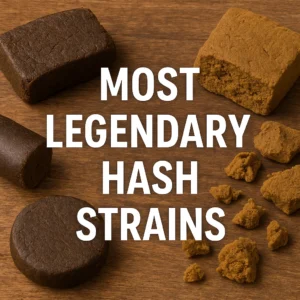
Different traditions, different textures—pressed bricks, temple rounds, and crumbly blond cuts.
Why These Strains Endure
The names that survive—Afghan, Lebanese Red, Moroccan, Kashmir, Nepal, Mazar—do so because they solve the same problem in different ways: how to preserve and present resin so it tastes good, burns well, and puts the body at ease. Each region, cultivar, and method leaves fingerprints on the finished piece. Afghan shows what warm pressing and patient cure can do; Lebanese proves that sun and time can paint flavors into cedar and spice; Moroccan teaches that a tidy kief press can be bright and sociable; Kashmir and Nepal remind us that hands can shape resin into comfort.
And that’s why the word “legendary” won’t ever belong to one slab or era. It belongs to ritual—the way you line a joint; the way the first puff tastes different from the second; the way conversation slides from enthusiasm into laughter into quiet. If you collect a few of the profiles in this guide, you’ll own those rituals in whatever city you call home.
Choosing Your Own Classics
If you want a quick, reliable starter panel, build it like this and let your palate do the talking:
-
Anchor with Afghan Black Hash for the archetypal incense-cocoa lane.
-
Add Mazar-e-Sharif to feel the Afghan spectrum lean floral and lifted.
-
Choose one hand-rubbed: Kashmir Hash for earthy ease or Nepal Finger Hash for glossy charas style.
-
Keep Black Bombay Hash or Hash Amsterdam for nights when you want either silk or a clean, sociable bridge.
From there, add a Lebanese when you find one you trust, and don’t pass up a tidy Moroccan when a friend brings it home—those pieces round out the map.
Final word
The most legendary hash strains are legends because they deliver recognizable, repeatable experiences. Afghan settles the room. Lebanese brightens it. Moroccan keeps the conversation moving. Kashmir and Nepal straighten the day’s edges. Amsterdam holds the middle. None is “best” for every moment, and that’s the point. Keep two or three on hand, match them to mood and company, and you’ll understand why so many stories about travel, music, and friendship are, at their core, stories about hash.
Ready to Upgrade Your Stash?
Stop gambling on low-grade knock-offs. HashMOM is Canada’s trusted source for authentic imports and premium craft concentrates. Shop our full selection today with fast, discreet shipping.