
What Is Temple Ball Hash
What Is Temple Ball Hash
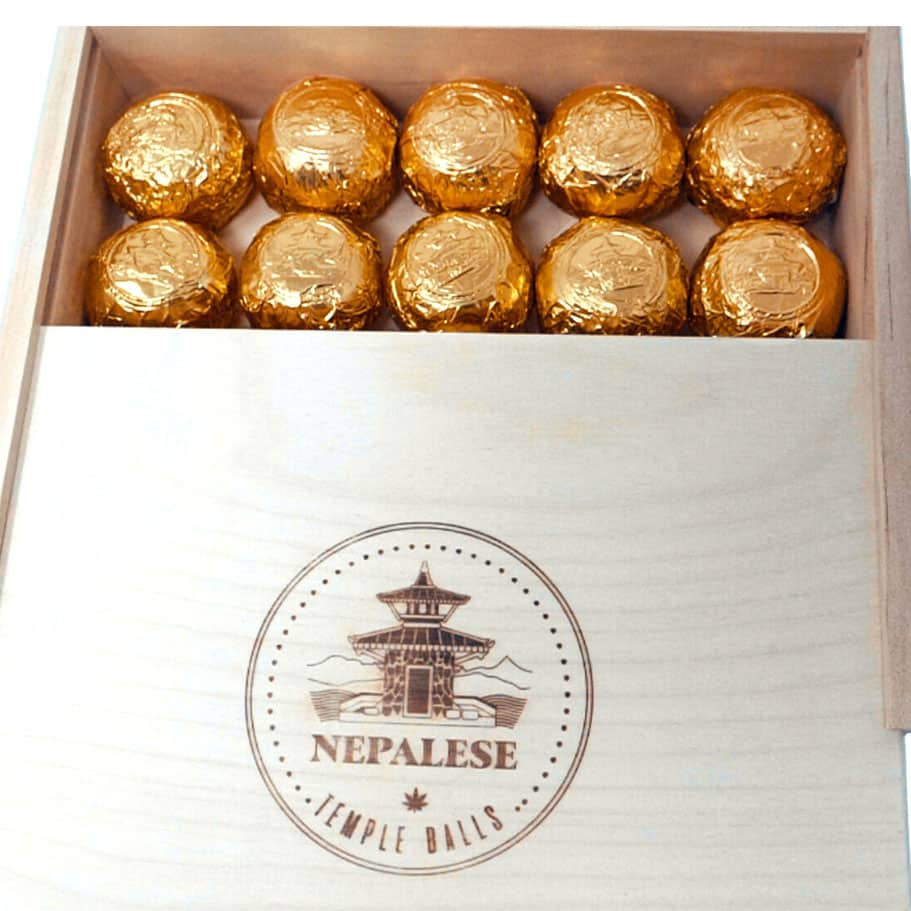
Temple ball hash is a hand-rolled Nepalese-style hash made by warming fresh, sticky hash and rolling it between the palms into smooth dark spheres. The rolling oxidizes and polishes the surface to a glossy black-brown sheen while the interior stays soft and aromatic. Traditionally made from Himalayan landrace cannabis at 50-70% THC, modern temple balls are often pressed bubble or dry sift hash shaped by hand. The original luxury hash format – dense, slow-burning, terpene-rich, and easy to break off small pieces for a bowl or joint.
What is temple ball hash?
Temple ball hash (also called “temple balls” or “Nepalese fingerprint hash”) originated in the Himalayan regions of Nepal and northern India in the 1960s and 70s. Traditional production starts with hand-rubbed charas from live cannabis plants – workers walk through the fields rubbing flowering tops between their palms, then scrape the resin off their skin. The resin is gently warmed, rolled tightly into balls about the size of a marble or golf ball, and polished by continuous hand rotation until the surface turns glossy black.
How is temple ball hash made?
Traditional production process:
- Workers rub live, sticky cannabis flower tops between their palms
- Sticky resin accumulates on hands as a green-brown layer
- Resin is scraped off and collected in small lumps
- Lumps are warmed slightly and rolled between palms for 20-30 minutes
- The rolling action homogenizes the resin and polishes the outer surface
- Final ball is dense, dark, and has a glossy “fingerprint” surface
Modern Canadian temple ball makers often start with high-grade bubble hash or dry sift instead of hand-rubbed charas. The resulting ball is similar in appearance but typically cleaner in cannabinoid profile and free of plant matter.
What does temple ball hash look like?
Real temple ball signatures:
- Colour: dark brown to nearly black on the outside, often lighter inside
- Shape: round, slightly egg-shaped, marble to golf ball size
- Surface: glossy, smooth, sometimes shows hand fingerprints
- Texture: dense and slightly malleable – soft enough to break off small pieces, firm enough to hold shape
- Smell: spicy, earthy, sometimes floral or cedar-like
A temple ball that has the right finish bends slightly when warmed in the hand. Too brittle and it dries out the resin; too soft and the rolling never compressed it properly.
How strong is temple ball hash?
Traditional hand-rubbed temple balls test in the 50-70% THC range. Modern bubble-hash-based temple balls can hit 70-85% THC because the starting material is more concentrated. The polish process itself does not change cannabinoid content – it just compresses and homogenizes. The strength depends entirely on the source material going into the ball.
How do you smoke temple ball hash?
Three traditional methods:
- Crumble onto a bowl: warm the ball briefly, pinch off 0.1-0.2 g, sprinkle on packed flower in a pipe or bong
- Roll into a hash joint: warm and roll a small piece into a snake shape, lay along the inside of a joint paper before adding flower
- Use a hot knife: heat two knives, sandwich a tiny piece between them, inhale the vapor through a bottle or tube
Modern Canadians often dab small pieces of temple ball at 400-450F. The dense format works well for low-temp dabs because the heat penetrates evenly and the terpenes vaporize cleanly. Our hash smoking guide covers all methods.
How is it different from charas hash?
Both start from hand-rubbed live cannabis resin. The differences:
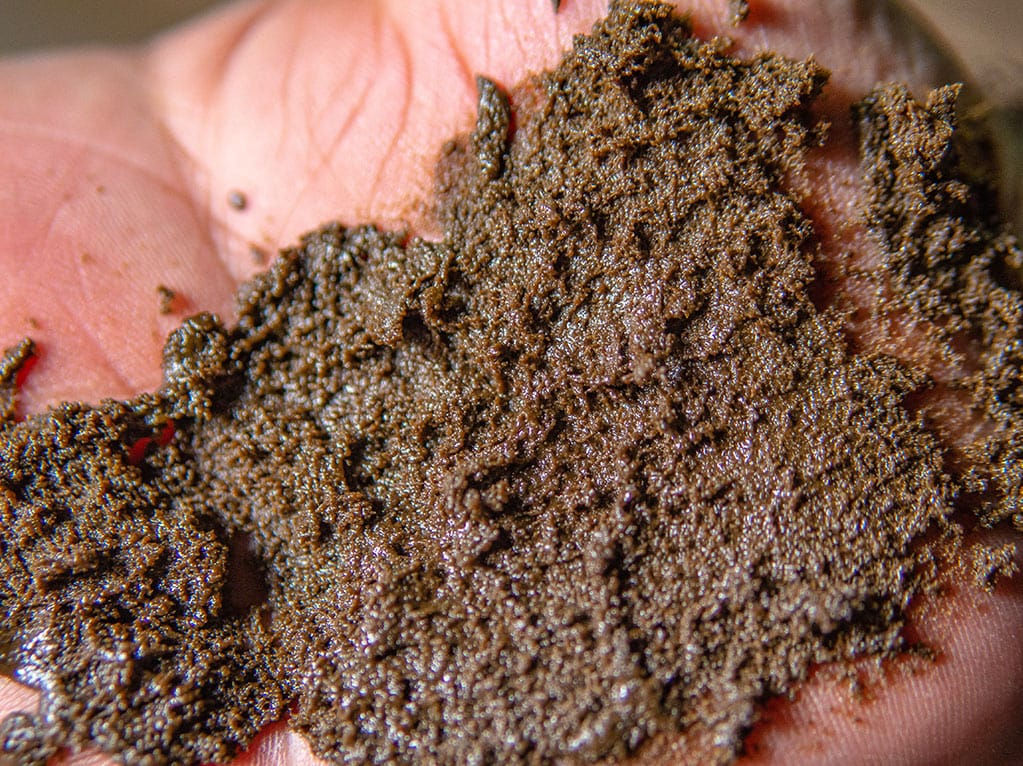
- Charas: loose, sticky, less compressed – often sold as small balls or sticks
- Temple ball: highly compressed, polished, rolled into glossy spheres
Charas is the raw form; temple ball is the finished luxury format. Many premium temple balls are made from charas that has been gently warmed and rolled into the finished ball shape. Our charas guide covers the upstream process.
Why is it called “temple ball”?
The name comes from Nepal where premium hand-rubbed hash was traditionally offered at Hindu and Buddhist temples – particularly during religious festivals. Devotees would bring the best balls of resin as offerings, and travelers in the 1960s and 70s used “temple ball” to describe the polished spherical hash format they found in Kathmandu markets. The name stuck across hashish culture even though many modern temple balls have no religious or geographic connection to actual temples.
How do you store temple ball hash?
Storage tips for keeping a temple ball at peak quality:
- Glass jar with airtight seal, or wrapped in parchment inside a tin
- Cool dark cabinet at 60-70F – cooler than ambient but not refrigerated
- Out of direct light
- Avoid plastic baggies (the resin sticks and degrades)
- Do not freeze – the ball will crack and lose its texture
A properly stored temple ball stays usable for 2-5 years. Some traditional Nepalese balls have been aged for a decade and gained smoother smoke profile from slow terpene oxidation. The polished surface acts as a partial seal against air exposure.
What colour should a temple ball be?
Signs of quality:
- Outside: dark brown to black, glossy if recently rolled, matte if aged
- Inside (when broken): lighter brown to amber – greener inside suggests less polish or less curing
- Surface texture: smooth and slightly sticky to the touch
Bright green inside means the ball was made hastily or the source material was less mature. Pitch black throughout means it was over-oxidized or the source was already old. The best balls show that gradient from dark exterior to softer interior.
Is temple ball hash legal in Canada?
Hash including temple ball hash is regulated under the Cannabis Act. Licensed Canadian producers can manufacture and sell hash products including pressed and rolled formats. Import from Nepal, India, or Morocco is illegal under federal law. Domestic temple ball hash made from Canadian licensed cannabis is fully legal at the licensed retail level. Full regulatory text at the Health Canada cannabis page.
Sources
- Clarke RC. Hashish! From the kingdom of charas to the dunes of Morocco. Red Eye Press, 1998.
- Andre CM, et al. Cannabis sativa: The plant of the thousand and one molecules. Front Plant Sci, 2016.
- Russo EB. Taming THC: potential cannabis synergy and phytocannabinoid-terpenoid entourage effects. Br J Pharmacol, 2011.
- Health Canada Cannabis Regulations, 2024.
Ready to Upgrade Your Stash?
Stop gambling on low-grade knock-offs. HashMOM is Canada’s trusted source for authentic imports and premium craft concentrates. Shop our full selection today with fast, discreet shipping.