Hash vs Kief
Hash vs Kief
Kief is loose powdery trichome heads that fall off cannabis flower when you grind it. Hash is kief that’s been compressed, heated, or processed into a denser solid form. Same starting material, different final product. Kief is roughly 30-50% THC and crumbly. Hash is 40-80% THC and holds together as a brick, ball, or chunk. Hash is basically pressed kief plus extra steps.
Are kief and hash the same thing?
Almost. Both come from the same place — the trichome heads that grow on cannabis flowers. The difference is what happens after collection:
- Kief — trichome heads sifted off the flower, left loose
- Hash — kief that’s been pressed, heated, or further processed into a solid
Think of kief as the raw ingredient and hash as the finished product. Or kief as the powder version, hash as the brick version.
What is kief?
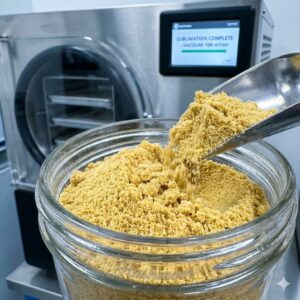
Kief is the fine powder that collects in the bottom chamber of a three-piece grinder. Those tiny crystals are trichome heads — the resin glands that hold most of the plant’s THC and terpenes. When you grind cannabis, the friction breaks the trichome heads off the flower and they fall through the grinder’s mesh screen.
Pure kief looks like blonde to light tan sand. Greener kief means plant matter got through the screen. Sticky kief is fresher. Dry powdery kief has been sitting around losing terpenes.
What is hash?
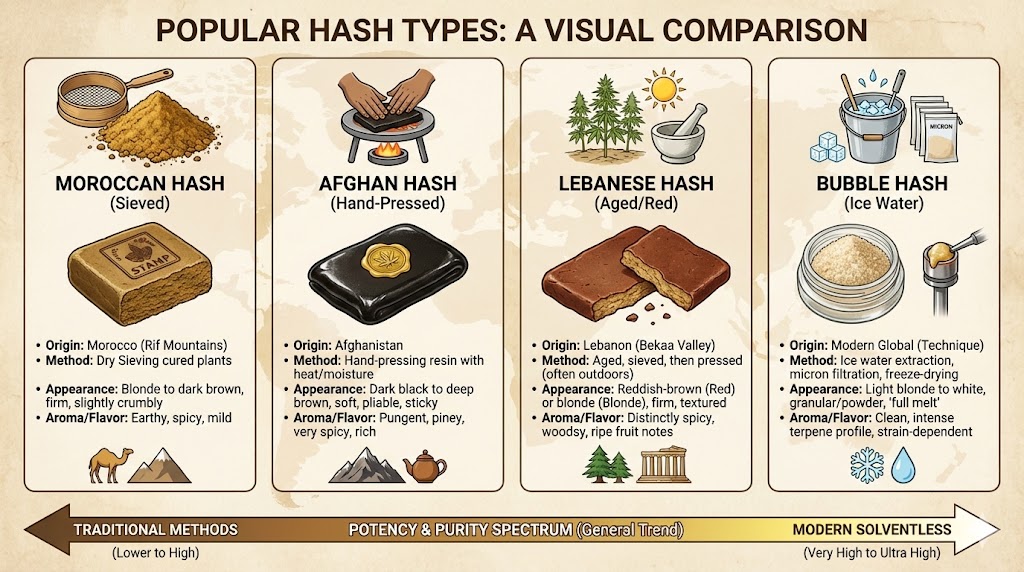
Hash is kief that’s been processed into a denser form. Multiple methods exist:
- Dry sift hash — kief pressed with hand pressure or heat into a brick
- Bubble hash — trichomes separated in ice water, then dried and pressed
- Charas — fresh sticky resin rubbed off live plants by hand
- Temple ball hash — kief or charas rolled and polished into shiny spheres
The compression and sometimes mild heat fuses the trichomes together. The result smokes slower, hits harder per gram, and stores better than loose kief.
What’s stronger — kief or hash?
Hash usually. Loose kief from a grinder runs 30-50% THC. Pressed hash made from the same kief runs 40-60%. Premium hash (bubble, dry sift at quality micron grades) can push 60-80% THC.
The reason hash hits harder per gram: compression removes the air pockets between trichome heads. A 0.1g pinch of kief is mostly air. A 0.1g pinch of hash is dense cannabinoid + terpene matter. More material per gram = more THC per hit.
Does kief turn into hash automatically?
Not really. Kief stored loose stays loose. To make hash you need pressure (a kief press or pollen press) or heat (low-temp baking, ironing through parchment) to fuse the trichomes. Without that, kief slowly degrades — terpenes evaporate, THC oxidizes to CBN, the colour darkens. Old kief that’s been sitting for months is just dry weak kief, not hash.
Can you smoke kief the same way as hash?
Mostly yes. Common methods for both:
- Top a bowl — sprinkle on packed flower in a pipe or bong
- Twax a joint — roll it into or onto a joint
- Hot knife — works for hash but not for kief (kief is too loose)
- Dab — hash dabs decently, kief crumbles and burns inefficiently
The practical difference: hash is easier to portion, less messy, and burns slower. Kief is faster to access (no production step) but harder to handle. Our hash consumption guide covers all the methods.
Do you need to decarb kief or hash?
Yes — but only for edibles. When you smoke or vape either one, the heat decarboxylates the THCa to THC in real time. Eating raw kief or hash produces almost no high because the cannabinoids stay in their acid form. For edibles, bake the kief or hash at 240°F for 25-30 minutes before infusing into butter or oil. Our decarb hash guide walks through it.
Can you make hash from kief at home?
Yes, easily. Three home methods:
- Pollen press — load kief in a small press, twist hard, leave overnight. Cheapest, $15-30 for the press.
- Iron + parchment — wrap kief in parchment, iron on low heat for 30 seconds. Free if you have an iron.
- Bottle method — put kief in a film canister or pill bottle, soak in warm water, knead for 10 minutes. Produces softer hash.
Pollen press is the cleanest method. The result is a small dense puck of dry-sift hash that smokes slower and hits harder per gram than the loose kief you started with.
What grade of kief makes the best hash?
The micron grade of the sifting screen matters:
- 220 micron — too coarse, lets plant matter through
- 120-160 micron — common grinder mesh, mid-quality kief
- 73-90 micron — the sweet spot for premium hash
- 45 micron — cleanest hash, lowest yield
Grinder kief is usually 120-160 micron and decent for personal use. Premium hash producers use 73-90 micron screens because that’s where the mature trichome heads land. Below 45 microns you mostly catch contamination.
Where do you buy kief and hash in Canada?
Both are sold by licensed Canadian producers and on-reserve retailers. Hash has wider commercial availability because it stores longer and ships better. Kief is harder to find as a standalone product — most consumers collect their own from grinder bottoms. For premium imported-style hash from Canadian producers, browse our HashMOM collection. Health Canada regulations at the cannabis regulations page.
Ready to Upgrade Your Stash?
Stop gambling on low-grade knock-offs. HashMOM is Canada’s trusted source for authentic imports and premium craft concentrates. Shop our full selection today with fast, discreet shipping.