Hand-Rubbed vs. Pressed Hash
Hand-Rubbed vs. Pressed Hash: What’s the Difference?
Hash comes in many forms — soft, sticky, crumbly, or solid — but the real difference lies in how it’s made. Two main techniques dominate the world of hashmaking: hand-rubbed and pressed. Both produce exceptional products, yet the process, texture, and final experience vary dramatically.
For true enthusiasts and newcomers alike, understanding these two styles helps you appreciate what’s in your stash — and why one might suit your preferences better.
In this guide, we’ll break down what hand-rubbed and pressed hash are, how they’re made, how they differ, and which styles you’ll find among Canada’s top imports at HashMOM.
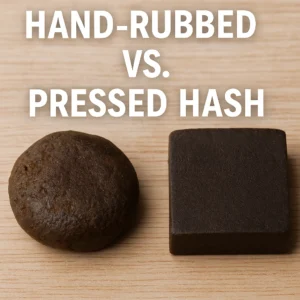
Hand-Rubbed vs. Pressed Hash — two traditional methods that define the texture, aroma, and feel of classic imports.
The Origin of Hashmaking
Hashish has been made for centuries, long before extraction labs and solvent-based concentrates. Farmers in Afghanistan, Morocco, Lebanon, and Nepal developed ways to separate resin (trichomes) from cannabis plants to create a potent, compact product that could be stored, traded, and smoked easily.
Over time, two methods emerged as dominant traditions — one based on friction and resin collection (hand-rubbed) and another based on mechanical separation and compression (pressed).
Both share the same goal: capturing the most resin-rich part of the plant in its purest, most flavorful form. The difference lies in the craftsmanship — and that’s where each style earns its identity.
What Is Hand-Rubbed Hash?
Hand-rubbed hash is the oldest known form of hashish. This traditional method is still practiced in the Himalayan regions of Nepal and India, as well as parts of Afghanistan and Kashmir.
Instead of using sieves or screens, the resin is collected directly from live cannabis plants. Farmers gently rub the flowering tops between their palms, causing the sticky resin to adhere to their skin. Over time, this builds up into a thick, dark layer, which is then carefully scraped off and rolled into smooth, glossy balls or logs.
That’s where products like Temple Ball Öm get their signature look — soft, elastic, and slightly oily with a rich, herbal aroma.
Characteristics of Hand-Rubbed Hash
-
Texture: Sticky, glossy, and pliable
-
Color: Dark brown or black on the outside, lighter brown inside
-
Aroma: Sweet, earthy, and resinous — often floral or herbal
-
Smoke: Thick, smooth, and flavorful
-
Effect: Heavy, relaxing, and meditative
Because the resin is taken from live plants, hand-rubbed hash often contains fresh plant oils and terpenes, giving it a unique depth and potency. It’s also more aromatic and moist compared to dry-sift or pressed varieties.
How Hand-Rubbed Hash Is Made
The process is simple, but requires skill and patience:
-
Harvesting Fresh Plants: Farmers choose mature cannabis plants rich with trichomes.
-
Rubbing and Collecting Resin: Flowers are gently rolled between the palms. This friction collects resin glands on the skin.
-
Scraping and Shaping: Once enough resin builds up, it’s scraped off and kneaded into uniform balls or slabs.
-
Curing: The hash is aged in cool, dark environments for weeks or months to improve consistency and flavor.
The result is a soft, aromatic hash that captures the essence of the live plant — full-bodied and naturally balanced.
What Is Pressed Hash?
Pressed hash refers to any hash that’s made by sifting dried cannabis through fine mesh screens to separate trichomes, then pressing the collected kief into compact slabs or bricks using gentle heat and pressure.
This is the standard method used in Morocco, Lebanon, and Afghanistan, where sun-cured cannabis is dry-sifted and transformed into export-ready blocks.
Pressed hash includes a wide range of styles found on HashMOM — from Moroccan Blonde Hash to Afghan Palm Tree Hash and Red Lebanese Hash.
Characteristics of Pressed Hash
-
Texture: Firm, sometimes crumbly or clay-like
-
Color: Ranges from golden brown to nearly black
-
Aroma: Sweet, spicy, woody, or earthy depending on origin
-
Smoke: Clean, light, and easy-burning
-
Effect: Balanced, long-lasting, and clear-headed
Pressed hash tends to have lower moisture and a more consistent burn, making it ideal for joints, bowls, or vaporizing.
How Pressed Hash Is Made
The dry-sift and pressing process can vary by region, but it follows a similar foundation:
-
Drying the Cannabis: Harvested plants are hung to dry completely, allowing trichomes to harden.
-
Sifting: Dried buds are placed on silk or mesh screens and gently shaken to separate resin heads.
-
Collecting Kief: The fine powder (kief) that falls through is collected and refined.
-
Pressing: The kief is then compacted under moderate heat and pressure until it forms a cohesive slab.
-
Curing and Aging: Like wine, pressed hash improves with age, deepening its flavor and smoothness.
Moroccan and Lebanese producers often use cloth wrapping and slow pressing to achieve that iconic golden, slightly crumbly texture seen in products like Moroccan Mousseaux Hash.
Key Differences Between Hand-Rubbed and Pressed Hash
While both types of hash are solventless and made purely from cannabis resin, there are important distinctions in their look, feel, and high.
1. Source Material
-
Hand-Rubbed: Made from fresh, live cannabis plants.
-
Pressed: Made from dried, cured plant material (kief).
2. Texture and Appearance
-
Hand-Rubbed: Soft, sticky, and shiny with an oily surface.
-
Pressed: Dense, dry, and compact — may crumble when warmed.
3. Aroma and Flavor
-
Hand-Rubbed: Rich, herbal, and often fruity or floral.
-
Pressed: More complex spice and earth tones from aged resin.
4. Potency and Effects
-
Hand-Rubbed: Strong, relaxing body high with meditative calm.
-
Pressed: Balanced head and body effects, smoother for social use.
5. Shelf Life
-
Hand-Rubbed: Moist and sensitive to temperature changes; best kept cool.
-
Pressed: More stable and durable, easier to store long-term.
The Role of Climate and Culture
Each hash style evolved naturally based on regional conditions.
In cold, humid Himalayan regions, hand-rubbing is ideal because fresh resin stays workable without drying out. The higher altitude also encourages trichome production.
In dry, arid regions like Morocco and Lebanon, dry-sifting works better — plants cure quickly in the sun, making resin easy to separate. The result is a lighter, more stable product that travels well across long distances.
That’s why imports like Moroccan Blonde Hash and Red Lebanese Hash have distinct golden hues and dry crumble, while Himalayan-style hashes like Temple Ball Öm are darker, oilier, and more aromatic.
How to Tell Which One You Have
You can usually tell whether your hash is hand-rubbed or pressed just by its texture and smell:
-
If it’s soft, shiny, and leaves a slight oil residue when rolled — it’s hand-rubbed.
-
If it’s firm, matte, and crumbles easily — it’s pressed.
Hand-rubbed hash often burns slower, producing dense white smoke. Pressed hash burns evenly with less residue, perfect for mixing with flower or rolling into joints.
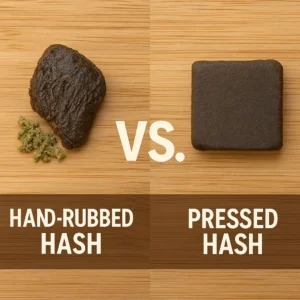
Comparing the dark, oily hand-rubbed hash with the firm, dry-pressed hash that defines regional craftsmanship.
Which Is Better: Hand-Rubbed or Pressed?
There’s no universal winner — it depends on your personal preference and mood.
Choose hand-rubbed hash if you want:
-
Deep relaxation and body calm
-
Rich, earthy flavors
-
A soft, meditative smoke
Choose pressed hash if you prefer:
-
Balanced effects for social or daytime use
-
Easy crumbling and mixing
-
Classic coffee-shop style texture
For example, if you enjoy heavy, aromatic resin, Temple Ball Öm delivers that pure hand-rubbed feel. If you like golden, crumbly imports, Moroccan Mousseaux Hash or Gold Bar Hash give a clean, uplifting smoke.
Storage and Handling Tips
Both hash types benefit from careful storage. Keep your pieces:
-
Cool: Avoid direct sunlight or high heat.
-
Airtight: Use glass jars or tins to prevent drying out.
-
Dark: Protect from UV exposure to preserve cannabinoids and terpenes.
Hand-rubbed hash like Temple Balls should be wrapped in parchment to retain moisture. Pressed hash can be stored long-term in sealed jars without issue.
For more details, see our full guide: Best Ways to Store Your Hash.
Why HashMOM Carries Both Styles
At HashMOM, we celebrate the diversity of traditional hashmaking. Both hand-rubbed and pressed imports are sourced directly from experienced producers who still use regional techniques.
Our collection includes:
-
Temple Ball Öm – Nepalese-style hand-rubbed resin with smooth, meditative effects.
-
Afghan Palm Tree Hash – Dense, dark, and body-heavy pressed hash.
-
Moroccan Mousseaux Hash – Creamy, golden, and perfectly balanced.
-
Red Lebanese Hash – Spiced aroma and clean, social high.
Every piece is inspected, tested, and shipped securely across Canada — maintaining the same quality that made Mr. Hash famous, now refined under HashMOM’s higher standards.
Final Thoughts
Hand-rubbed and pressed hash may share the same roots, but they offer distinctly different experiences. Hand-rubbed pieces like Temple Ball Öm deliver that ancient, spiritual smoothness — dark, oily, and full of aroma. Pressed imports like Moroccan Blonde and Afghan Palm Tree Hash offer structure, consistency, and the clean burn hash lovers rely on daily.
Both methods reflect centuries of craftsmanship and regional culture, proving that no matter how advanced extraction technology gets, traditional hash will always hold the heart of cannabis.
If you want to experience both sides of the craft, explore the full imported hash lineup at HashMOM — Canada’s #1 destination for authentic, small-batch global hash.
Ready to Upgrade Your Stash?
Stop gambling on low-grade knock-offs. HashMOM is Canada’s trusted source for authentic imports and premium craft concentrates. Shop our full selection today with fast, discreet shipping.